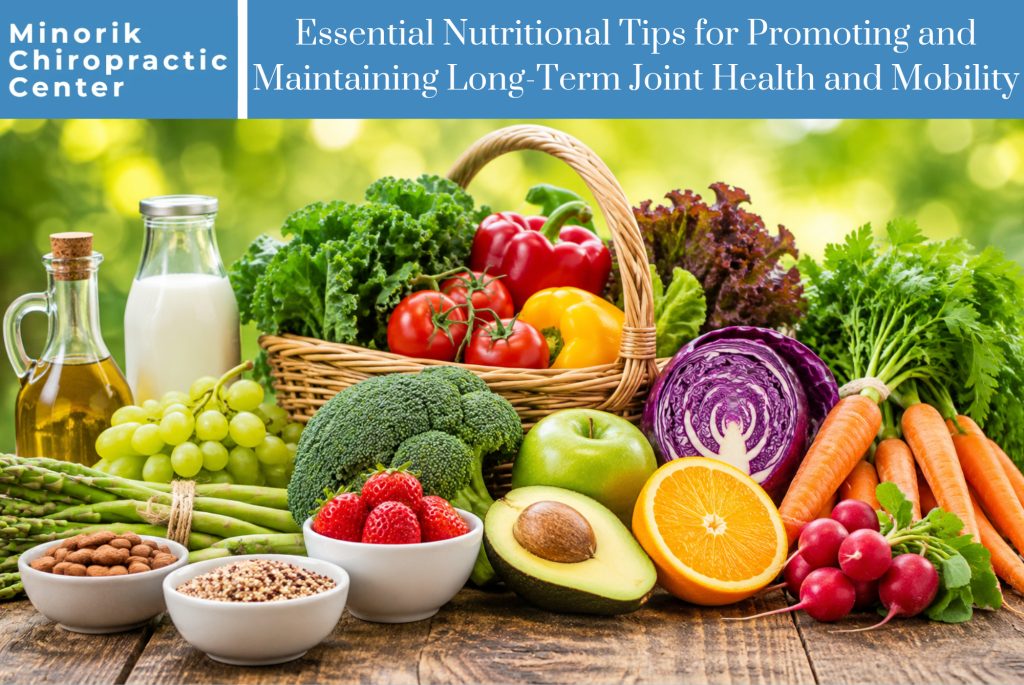
Joint health is a critical component of overall well-being, impacting mobility, flexibility, and quality of life. Whether you’re experiencing occasional discomfort or managing a condition like arthritis, supporting your joints through proper nutrition can make a significant difference. At Minorik Chiropractic Center, we believe in a holistic approach to health, and that includes taking care of your joints through the foods you eat. Here are some essential nutritional tips to help support joint health and keep you moving comfortably.
Key Nutrients for Joint Health
- Omega-3 Fatty Acids
- Why it’s important: Omega-3 fatty acids are known for their anti-inflammatory properties, which can help reduce joint pain and stiffness, especially in people with arthritis.
- Sources: Fatty fish like salmon, mackerel, sardines, flaxseeds, chia seeds, and walnuts are rich in omega-3s. Fish oil supplements are another great option.
- Vitamin D
- Why it’s important: Vitamin D plays a crucial role in calcium absorption, which is necessary for maintaining healthy bones and joints. It also helps reduce inflammation.
- Sources: Sun exposure is the best source of Vitamin D, but it can also be found in fortified dairy products, fatty fish, and supplements.
- Calcium
- Why it’s important: Calcium is essential for bone health, which in turn supports healthy joints. A lack of calcium can lead to weak bones and increase the risk of joint-related issues.
- Sources: Dairy products, leafy green vegetables like kale and spinach, tofu, almonds, and fortified foods.
- Collagen
- Why it’s important: Collagen is a protein that provides structure to your skin, tendons, and cartilage. Taking collagen supplements may help improve joint pain and slow down the degeneration of cartilage.
- Sources: Bone broth, chicken skin, and fish are natural sources. Collagen supplements can also be an easy way to increase intake.
- Antioxidants (Vitamin C and E)
- Why it’s important: Antioxidants protect your body from inflammation and oxidative stress, both of which can worsen joint issues.
- Sources: Citrus fruits, bell peppers, strawberries, almonds, spinach, and sunflower seeds are excellent sources of Vitamins C and E.
- Glucosamine and Chondroitin
- Why it’s important: These are compounds found in cartilage that help support its structure and may slow joint deterioration. Supplementation can benefit people with osteoarthritis.
- Sources: While these nutrients are primarily available through supplements, bone broth can also provide small amounts of glucosamine.
Foods to Limit or Avoid
Some foods can increase inflammation and worsen joint pain. Here’s what to keep in check:
- Processed Foods: High in trans fats, sugar, and salt, processed foods can promote inflammation. Try to minimize consumption of chips, frozen meals, and baked goods.
- Sugar: Excess sugar can lead to increased inflammation in the body. Limiting sugary beverages, desserts, and candies can benefit joint health.
- Alcohol: Drinking too much alcohol can lead to inflammation and may aggravate joint pain. Moderation is key.
Lifestyle Tips to Complement Nutrition
In addition to nutrition, there are other lifestyle habits that can improve joint health:
- Stay Active: Regular exercise, especially low-impact activities like swimming and cycling, helps keep your joints lubricated and your muscles strong.
- Maintain a Healthy Weight: Excess weight can put stress on your joints, especially your knees and hips.
- Hydrate: Staying well-hydrated helps your joints stay lubricated, making movement easier.
Comprehensive Q&A Section
Q: What are the best foods to eat to reduce joint pain? A: Foods rich in omega-3 fatty acids, like salmon and flaxseeds, are great for reducing inflammation and joint pain. Antioxidant-rich fruits and vegetables, such as berries and leafy greens, also help reduce inflammation.
Q: How much calcium should I be consuming daily for joint health? A: Adults typically need around 1,000 to 1,200 milligrams of calcium per day, depending on age and sex. It’s best to get calcium from a combination of food sources, such as dairy, leafy greens, and fortified products, or through supplements if necessary.
Q: Can taking collagen supplements help with joint health? A: Yes, collagen supplements can be beneficial for joint health as they help support the cartilage and may improve joint pain. Look for hydrolyzed collagen for the best absorption.
Q: Are there specific foods I should avoid to prevent joint pain? A: Yes, it’s best to limit processed foods, excessive sugar, and alcohol, as they can increase inflammation, potentially worsening joint pain.
Q: Is drinking enough water important for my joints? A: Absolutely! Water helps lubricate the joints and maintain the synovial fluid that cushions them, making movement easier and reducing pain or stiffness.
Q: Should I be concerned about Vitamin D deficiency if I don’t get much sunlight? A: Yes, a lack of sunlight can lead to Vitamin D deficiency, which may weaken your bones and joints. If you’re not getting enough sunlight, consider taking a Vitamin D supplement or eating fortified foods.
Contact Minorik Chiropractic Center
For more personalized nutritional advice or joint care, feel free to contact us:
Minorik Chiropractic Center
2620 W. Market St
Akron, OH 44313
Phone: (330) 869-6566
Website: minorikchiropractic.com
Request An Appointment: minorikchiropractic.com/new-patients/appointments/
At Minorik Chiropractic Center, we are committed to helping you achieve optimal joint health through chiropractic care and holistic wellness approaches. Schedule an appointment today to learn how we can support your joint health journey!